Reserving a European family hotel room with a dog is approximately 24 times easier than finding one with disability access, according to research from disability holiday specialist World Accessible Holidays published on 1 August 2025.
The findings matter well beyond the holiday market. UK employers who send disabled staff abroad rely on the same mainstream booking platforms, and patchy, inconsistent accessibility information makes it far harder to guarantee a suitable room than a pet-friendly one. That creates real friction for SMEs trying to meet their duty of care obligations when a wheelchair user is on the trip.
A 24-to-one gap across Europe
The study examined ten European areas: France, mainland Spain, Italy, Greece, the Antalya region of Turkey, Croatia, Portugal, Spain’s Canary Islands, Cyprus and Majorca. On Booking.com, approximately 37 per cent of family rooms across the ten countries were listed as pet-friendly, while only 1.5 per cent offered disability access. In total, 41,576 pet-friendly hotels offered family rooms, but a mere 1,684 of those family rooms met accessibility requirements.
In some countries the disparity stretched to 60 times. Croatia was the starkest example, with just 0.55 per cent of family hotels offering accessible rooms, a choice of only 36 properties, against 2,304 pet-friendly options on Booking.com. Portugal performed best, yet even its 2.4 per cent accessibility rate sat far below the 27.8 per cent of hotels welcoming pets. Every one of the ten areas returned more pet-friendly family rooms than wheelchair-accessible ones on both Booking.com and Expedia.com.
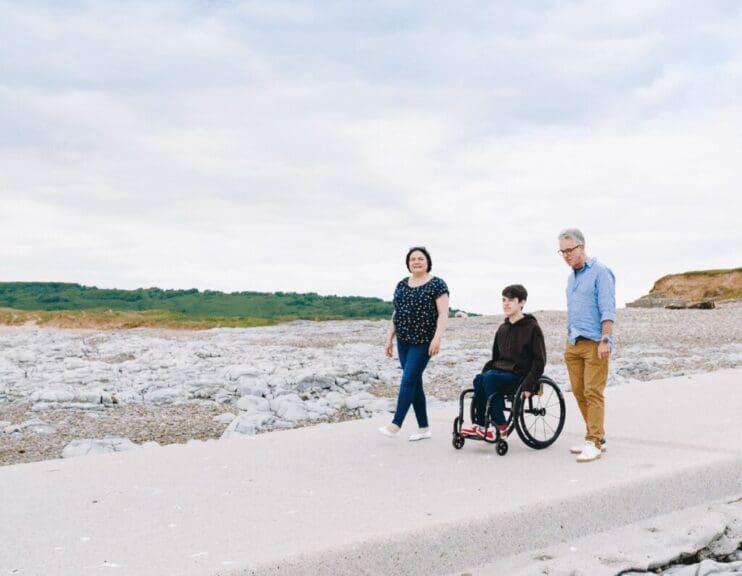
Paula Hansen, founder of World Accessible Holidays, said: “These statistics are disappointing but not surprising. How can it be acceptable for hotels to provide information about accepting pets on a stay and the facilities they can provide for your pooch, yet when it comes to people with wheelchairs, there’s silence? I love my pet, but the fact I know I can take my dog Angus, but not my son who uses a wheelchair and has cerebral palsy, is frankly shocking.”

Vague listings compound the problem
Beyond raw numbers, the research found hotels describe accessibility with little consistency, from “ramp and elevator access” and “top floor rooms include lift” to “entire unit wheelchair accessible”, leaving disabled guests unsure what they will actually find on arrival. Pet policies, by contrast, tended to be clearly worded. For UK businesses, that ambiguity sits uneasily alongside the standards set out in the government’s Equality Act guidance for service providers and the Equality and Human Rights Commission’s code of practice, which expect providers to anticipate disabled customers’ needs rather than wait to be asked.
Hansen, whose son is a wheelchair user, launched her transparent booking platform after struggling with the process herself. She said: “We conducted this research to evidence just how far down the priority ladder disabled people are, but I still can’t believe it’s easier to book a hotel for dogs than disabled people. At World Accessible Holidays we are working to change that — because people deserve more options than pets.”
Platforms acknowledge the shortfall
Demand for accessible travel is climbing, not shrinking. Eurostar reported a 15 per cent rise in accessibility requests in 2025, a sign that inclusive provision is becoming a mainstream expectation, and another reason for firms to build access needs into their company travel policy.
Booking.com responded that its aim is to make travel easier and more inclusive for everyone, pointing to detailed accessibility filters at both property and room level, covering features from grab rails and lowered sinks to visual aids and auditory guidance.
Its statement added: “While we acknowledge that this crucial information needs to be provided by more of our accommodation partners and that there is a long way to go to make travel more accessible for everyone, we are committed to continuing to surface accurate accessibility information so that everyone can find the travel options that are right for them.”