Lufthansa has begun real-world testing of an upgraded AeroSHARK film and this time the drag-cutting “shark skin” is heading for the wings.
Lufthansa Group has started flight-testing a next-generation version of AeroSHARK, the fuel-saving “shark skin” film that borrows the drag-reducing grooves of a shark to trim aircraft emissions. A Lufthansa City Airlines Airbus A319 (registration D-ABGK) has become the first aircraft in the world to fly the upgraded material in commercial service.
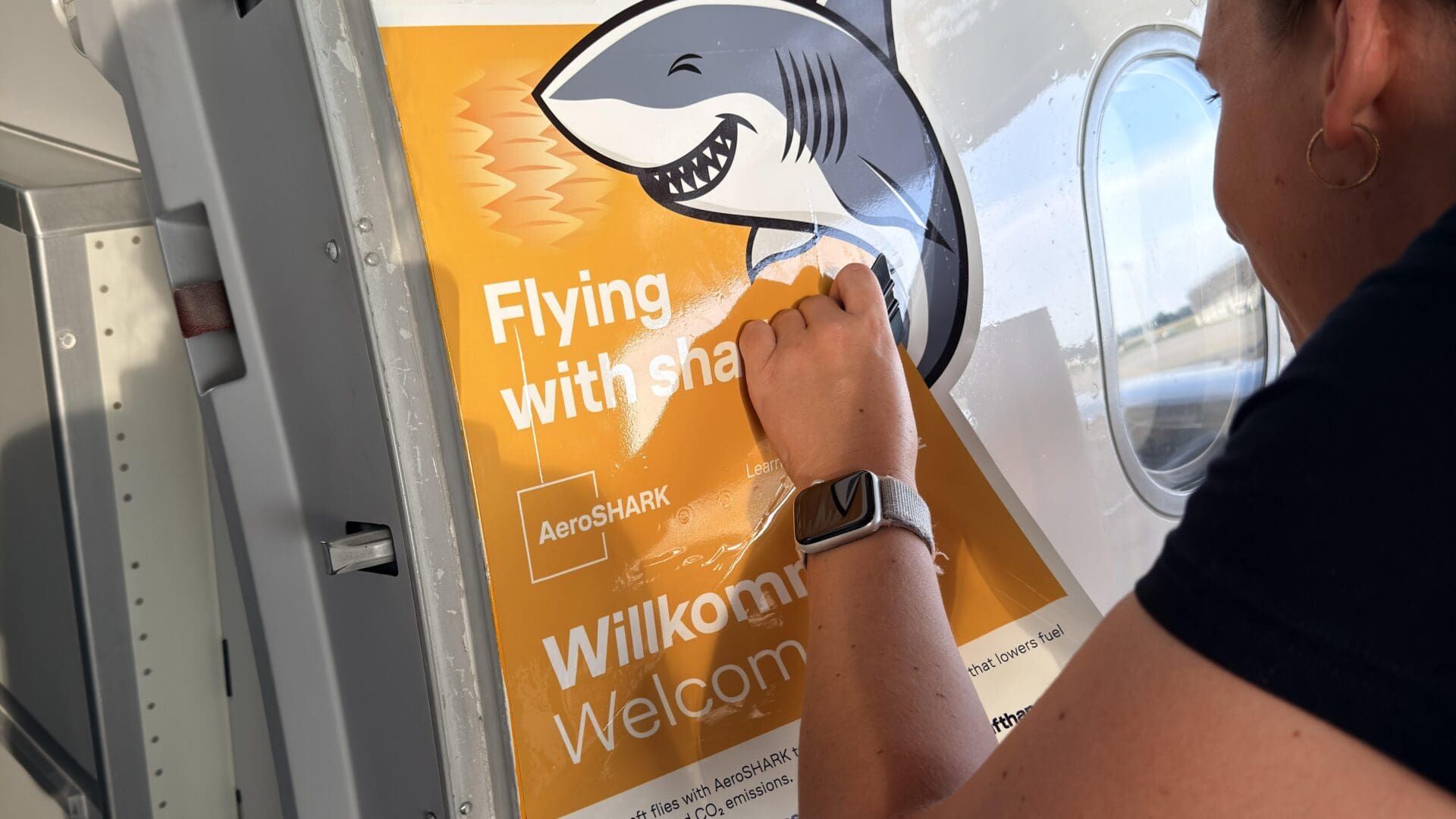
Around 70 transparent patches, each measuring 20 × 20 centimetres, have been applied to the fuselage and engine cowlings. Lufthansa Technik and development partner Surventis (formerly BASF Coatings) will assess them through February 2027, using scheduled Munich–Hamburg flights to test durability, cleaning and aerodynamic performance. The patches are all but invisible to travellers — flight operations are unchanged, and only a small welcome panel at the aircraft door flags the trial for the curious.

Why it matters
AeroSHARK is the only riblet technology certified for commercial aviation. Inspired by shark skin, its microscopic grooves, just 50 micrometres high, align with the airflow to cut friction and improve efficiency. The current version, already fitted to 22 long-haul jets across SWISS, Lufthansa Cargo, Austrian Airlines and Lufthansa, shaves around 1% off fuel burn and CO₂ per flight — worth roughly 19 tonnes of fuel and 60 tonnes of CO₂ saved across the fleet every single day.
The new patches vary in material and layer composition, so engineers can pinpoint the best mix of durability, easy application, cleaning and residue-free removal, with regular inspections during ground time in Hamburg. Crucially, the goal is to extend AeroSHARK beyond fuselages to the higher-load wings and tail surfaces — a step that could unlock far greater efficiency gains across both short- and long-haul fleets.
For the Lufthansa Group, the direction is clear: a wider roll-out across more aircraft types, lower fuel bills and emissions, and another quiet step towards greener corporate travel. For the frequent flyer, it means the aircraft at the gate may increasingly be wearing something borrowed from the ocean’s most efficient predator.