Six Senses has joined Recipe of Change, a global initiative convened by the United Nations Environment Programme (UNEP) and UN Tourism to unite the tourism sector in a shared commitment to halve food waste by 2030.
A living expression of the brand’s sustainable ethos and Eat With Six Senses philosophy, the engagement sees Six Senses share its long-learned operational and behavioural solutions through open conversations with guests and industry peers alike to address the near one-third of all food produced globally that is never eaten*.
A tool, not a trend
For Six Senses, sustainability has been driven by collective action since its founding in the mid-1990s. It runs through the veins of teams across all 27 properties and counting, working hand in hand with local environmental organizations. From chefs to gardeners, spa managers to housekeeping, beekeepers to botanists, and coral babysitters to the surround-sound engineers of the chicken houses, everyone plays a part.
Guests and hosts taste the fruits of this work through the Eat With Six Senses program, the brand’s guiding culinary philosophy based on the principles of natural ingredients, local and sustainable, and less is more. The intention is to help them reconnect with food, safe in the knowledge that everything they eat or drink is as good for them as it is for the world around them.
The Eating Ecosystem
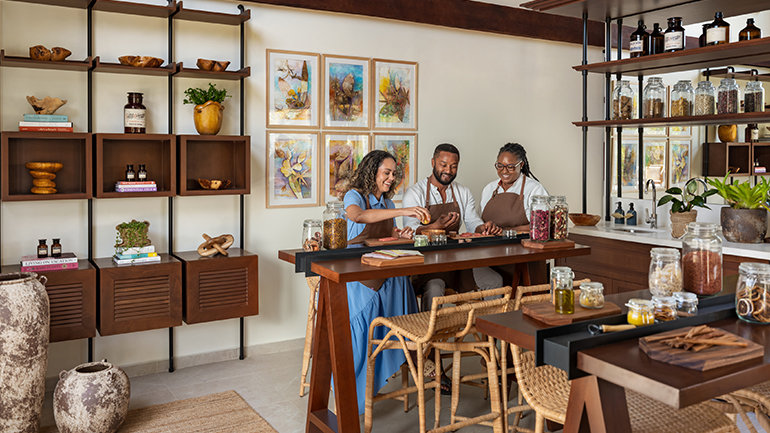
Introduced in 2017, Earth Labs within all Six Senses offer dedicated spaces for guests and hosts to engage with sustainability in a light-hearted and practical way, rolling their sleeves up to create everything from lip balms to pickles, and compost using leftover organic ingredients.
In the kitchens, daily waste measurement and immediate corrective actions happen in real time through production planning based on occupancy and ongoing menu rationalization to rotate low-consumption items. Smaller batch cooking methods and standardized portion sizes go further in helping to reduce plate waste to the point that, in the host canteens at Six Senses Vana, no food waste is reported at all.
Creative solutions, from core to crown
From London to the Laamu atoll, all Six Senses kitchens are guided by the simple rule: waste nothing. Whether in the dish or the décor, every part of the ingredient counts. The Scrap Challenge – an internal initiative – inspires ingenuity and sustainable solutions from within.

In Bali and Thailand, all parts of a homegrown pineapple are used, from juices at breakfast to crowning table decorations; papaya, mango, and avocado seeds are sprouted into living green decorations; and leftover coffee grounds are even mixed with cocopeat to make the dining tables themselves or returned to the soil as compost to support a diverse soil and gut microbiome. At Six Senses Zighy Bay in Oman, where 80 percent of organic and glass waste is recycled or upcycled on-site, 84 kilograms of citrus peels per month are transformed into candied garnishes and welcome amenities.
At Six Senses London, a Fermentation Lab repurposes otherwise wasted kitchen odds and ends into flavourful preserves and gut health heroes which return to the menu in new guises as things like sauerkraut, kimchi, yoghurt, and kefir. Chefs share these fundamentals of fermentation with guests through alchemy experiences.
Reimagining how food moves from soil to plate, local farmers pick to order for the kitchens at Six Senses Rome, delivering the same day in reusable plastic-free packaging. At Six Senses London, milk arrives in reusable kegs, and coffee is shipped by sail.
Harvesting from home soil and sea
Often within the walls or neighbouring fields, Six Senses farms bring an abundance of home-grown produce to the table. Alongside rows of seasonal produce for the hotels, relationships with pioneers in regenerative agriculture and wellness experts grow to share knowledge and experience. Six Senses Zighy Bay operates an 18,000-acre (7,300-hectare) farm in nearby Dibba, and Six Senses Ibiza’s local farm, Can Tanca, has become a thriving community. The Solar FreshCuts initiative at Six Senses Ninh Van Bay places the resort’s garden beneath 800 solar panels, a concept that received the “Global Low-Carbon Scenic Spot” prize by the Global Forum on Human Settlements, an award supported by UNEP.
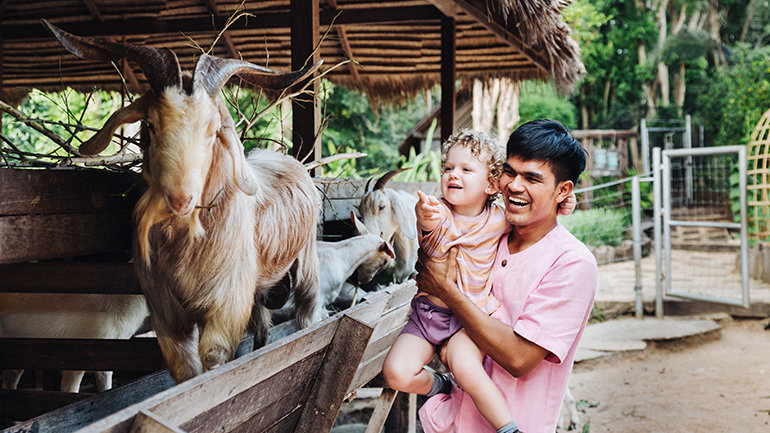
Farm on the Hill at Six Senses Samui may be a smallholding, but it adds purpose and value while benefiting the local community. The farm was created to address a landscaping necessity, which included a large volume of organic waste generated, unutilized greywater, and a lack of nutrient-rich soil. Now equipped with chickens, goats, and a greywater catchment system, the farm produces organic eggs, goat milk, and fresh vegetables.
At sea in the Maldives, a team of 10 marine biologists at Six Senses Laamu work with government and local fishermen to support sustainable fishing practices and eliminate unnecessary and unethical catch.
Setting the standard, scaling the impact
Beyond its properties, Six Senses works with local NGOs, schools, and hospitals to strengthen community services and improve access to essentials such as clean water and education. The group is an early signatory of the Global Tourism Plastics Initiative, led by the United Nations Environment Programme and the UN Tourism. Six Senses also collaborates with the United States Coalition on Sustainability and SustainChain™.