Marriott International has signed an agreement with Shanghai SIIC North Bund New Landmark Construction and Development Co., Ltd to bring Ritz-Carlton Reserve Shanghai to the city in 2030, the first time the group has placed its most exclusive luxury brand in a major urban centre rather than a remote destination.
For UK companies with operations or clients in China, the signing matters less for its opening date than for what it signals. Shanghai remains the country’s principal commercial hub and the default landing point for British business, and Marriott is betting that senior travellers heading there will pay for privacy and restraint rather than another large-format five-star box. On opening, the hotel is expected to make Shanghai the only city in the world where all eight of Marriott International’s luxury brands operate, giving corporate travel managers an unusually wide set of accredited options within a single loyalty programme.
What the urban Reserve concept changes
Ritz-Carlton Reserve has so far been built around rare, destination-led estates offering privacy, highly personalised service and a strong connection to place. The urban version applies the same principles to a small group of leading global gateway cities, and Marriott has been explicit that this is a deliberately selective extension designed to protect the brand’s scarcity rather than scale it.
In practice, that means each urban Reserve is positioned as a retreat inside the city rather than a conventional luxury hotel, built around cultural programming, discretion and a slower pace. For travel buyers, the practical read is straightforward: expect very limited room inventory, rates set well above the standard luxury tier, and a property unlikely to appear on volume corporate rate agreements.

A 480 metre tower on the North Bund
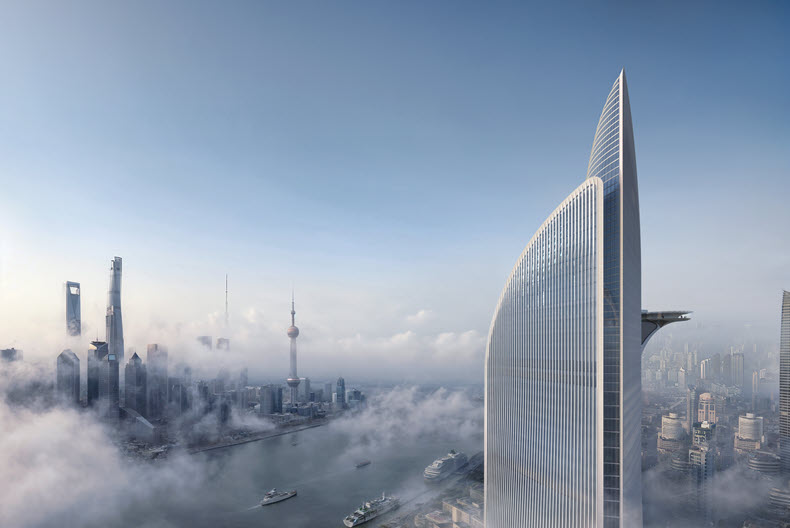
The hotel will occupy part of a mixed-use development on Shanghai’s North Bund, rising roughly 480 metres across 103 floors and also containing retail and office space, residences and an observatory deck. The waterfront district has become one of the city’s most significant development zones, combining commercial activity with lifestyle and architectural projects.
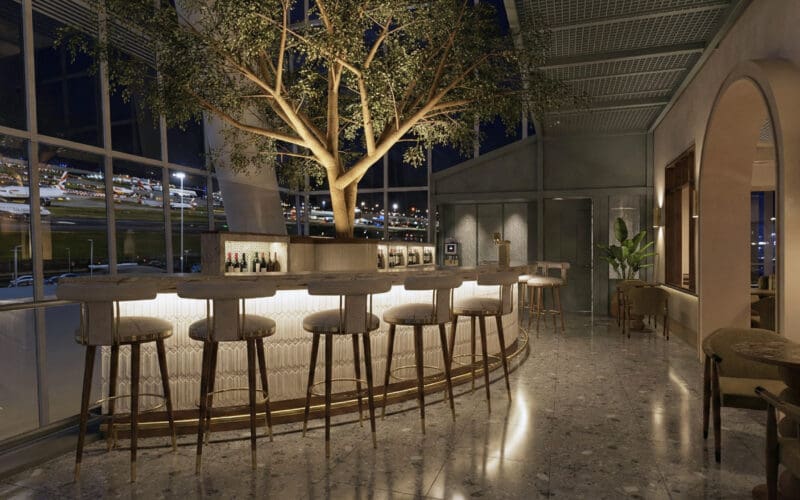
Marriott expects the hotel to hold 110 guest rooms and suites, with many overlooking the Bund and the Huangpu River, including a collection of suites and a Presidential Suite. Facilities are set to include a specialty restaurant, Chinese dining, a lobby lounge, a bespoke bar, an indoor swimming pool, a fitness centre and a spa and wellness retreat. At that room count, availability will be tight during Shanghai’s trade fair and conference peaks, and early booking will be essential for anyone hoping to use it for client entertaining.
The agreement was marked at a signing ceremony attended by Anthony Capuano, President and CEO of Marriott International, David Marriott, Chairman of the Board, Mao Yibing, President of Greater China, Bart Buiring, Managing Director, Luxury, Greater China, and Gavin Yu, Chief Development Officer, Greater China. They were joined by Zhang Qian, President of SIIC Group, Huang Haiping, Vice President of SIIC Group, Wang Zheng, Director of SIIC Group, Song Bo of Shanghai Chengtou Group, Liu Yanping of Shanghai Chengtou Assets Group and Xue Yongshen of Shanghai Construction Group.
The 2030 timeline puts this well beyond current travel policy cycles, but the direction is useful now. Marriott’s continued investment in Greater China, following its move to bring The Ritz-Carlton to Cambodia and the recognition of four Asia Pacific properties in a global best hotels list, points to a region where premium supply is still growing while much of Europe is static.
British travellers should also keep entry rules under review, as arrangements for China have shifted repeatedly in recent years. Current requirements are set out in the GOV.UK China travel advice. Buyers reviewing their Asia programmes can also track how Luxury Group by Marriott International is positioning its portfolio, since the Shanghai signing follows the same pattern of concentrating high-end brands in a small number of gateway cities.