Indian Hotels Company has reopened one of Frankfurt’s grand hotels as Taj Hessischer Hof Frankfurt, the group’s first property in continental Europe and a new upper-end option for UK firms sending staff to Germany’s financial capital.
The hotel gives Taj a third address within easy reach of British business travellers, after St. James’ Court, A Taj Hotel, London and Taj 51 Buckingham Gate Suites and Residences. For UK companies that already hold rates with the group in Westminster, the Frankfurt opening extends that relationship into a city most SMEs visit for banking, trade fairs or supplier meetings rather than for leisure.
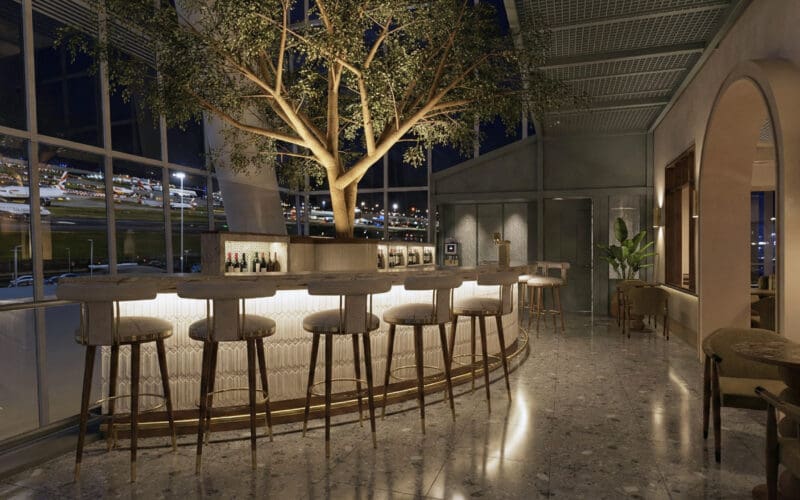
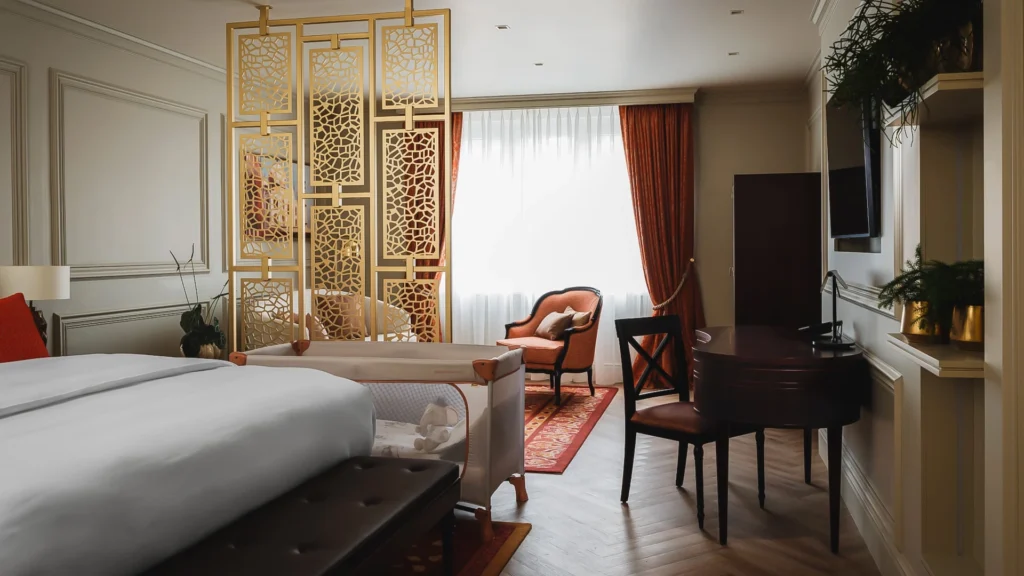
The Hessischer Hof has been part of Frankfurt’s hotel landscape for decades and has been restored and reworked under the Taj name. It now offers 117 rooms and nine suites, a 126-key property in total, with the heritage architecture retained alongside a more contemporary interior. The reopening also brings back Jimmy’s Bar, a Frankfurt fixture that had closed with the hotel.
What business travellers get on site
Two of Taj’s flagship concepts anchor the offering. Bombay Brasserie brings the group’s Indian dining to Frankfurt, and J Wellness Circle, Taj’s holistic wellness concept, handles the spa and treatment side. The hotel also houses The Chambers, Taj’s members-only business club, which will be familiar to anyone who has used the equivalent at the group’s London properties. Three daylit meeting spaces are available for board meetings and private receptions, which puts the hotel in contention for small-group corporate bookings rather than only overnight stays.
That combination matters more in Frankfurt than in most European cities. Demand here is driven by the exhibition calendar, and room rates swing sharply around the big fairs. A hotel with its own meeting capacity, a members’ club and a proper restaurant reduces the number of external bookings a traveller has to make in a week when the city is full.

Location and access from the UK
The hotel sits in central Frankfurt, close to the corporate district and within reach of Messe Frankfurt, the exhibition grounds that draw hundreds of thousands of trade visitors a year. Frankfurt Airport is roughly 12km from the centre with a direct S-Bahn link, and the city’s Hauptbahnhof puts most of western Germany within a couple of hours by rail.
Air access from Britain remains straightforward and is broadening. Condor and Air France added Frankfurt and Paris services from London Gatwick, giving travellers in the south east an alternative to Heathrow for a route that has long been dominated by Lufthansa and British Airways. Eurostar has also set out plans for direct services to Frankfurt with its new fleet, though that remains some way off.
A crowded top end
Taj arrives in a market that has been busy at the luxury end. The Florentin opened in the former Villa Kennedy building last year, reworking another well-known Frankfurt address, and the city has seen a run of new luxury hotel openings as owners bet on a recovery in corporate demand. For travel managers, more supply at the top of the market is useful leverage, particularly outside the peak fair weeks when Frankfurt hoteliers have historically had the upper hand in negotiations.
The commercial logic for IHCL is straightforward. Frankfurt is one of Europe’s principal gateway cities, and the group has said its international strategy is built on exactly those markets. Whether the Taj name travels as well in Germany as it has in London will depend on how quickly corporate accounts pick it up, but the hotel enters the market with a restored landmark, a revived bar and a business club, which is a stronger opening hand than most new entrants manage.