Nimble capacity planning, a record load factor and a surging cargo business helped Europe’s busiest network carrier stay firmly in the black despite war on its doorstep and soaring fuel bills.
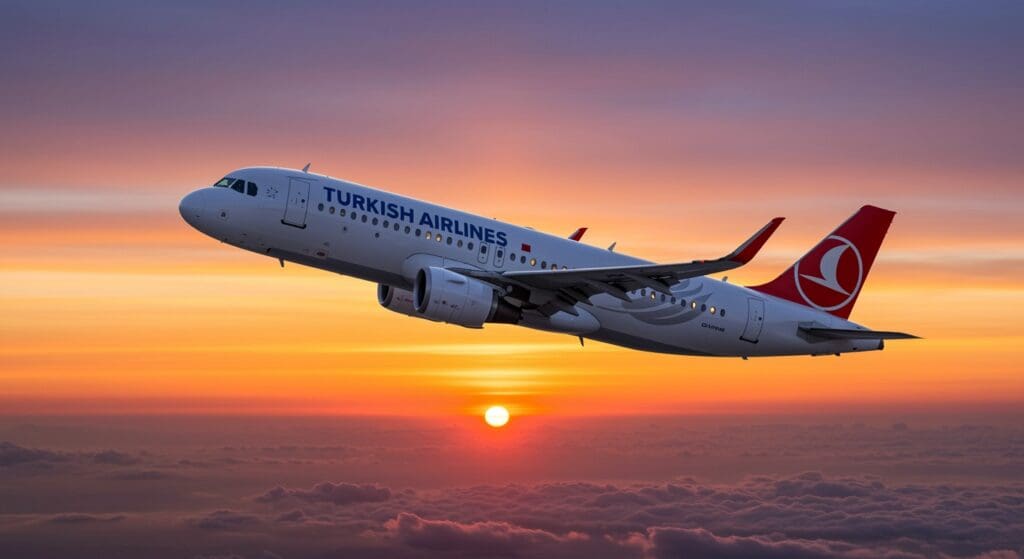
Turkish Airlines has shrugged off one of the toughest quarters in recent memory to report a net profit of $197 million for the second quarter of 2026 — a result the carrier credits to “dynamic capacity management” in the face of the war in the Middle East and a sharp spike in jet-fuel prices.
Total revenues climbed 20.5% year-on-year to $7.2 billion, as the airline adapted its schedule to a fast-changing operating environment. The standout performer was cargo: with geopolitical tensions squeezing global air-freight capacity, Turkish Cargo leaned on its infrastructure and its enviable position straddling East and West to grow volumes by 11.3% and lift revenues by a striking 58%, to almost $1.3 billion.
Profitability held up impressively, too. The delayed hit from higher fuel prices weighed on costs, but stronger passenger and cargo unit revenues more than cushioned the blow. EBITDAR came in above $900 million — comfortably ahead of the airline’s own 8% guidance — for a margin of 12.6%, with the investment portfolio helping deliver the bottom-line profit.

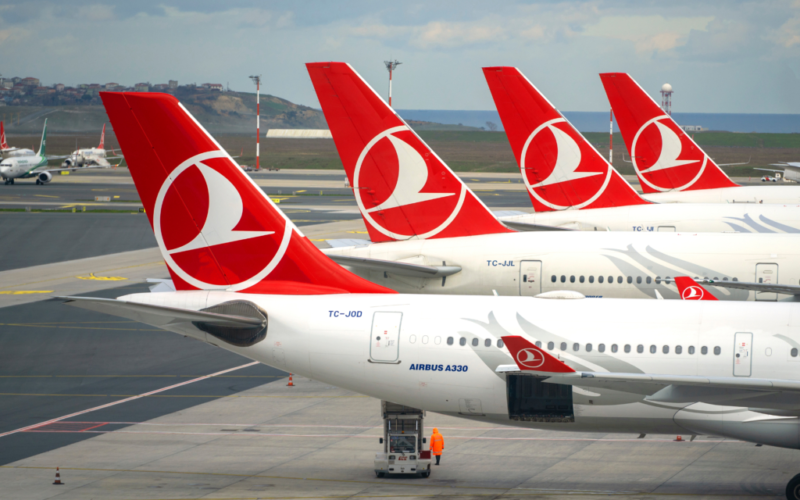
Passengers kept the cabins full: buoyant demand from Asia, Europe and Africa pushed the load factor up 1.8 percentage points to 84.0% — the highest second-quarter figure in the airline’s history. Behind the scenes, Turkish Airlines kept investing, expanding its fleet 14% year-on-year to 552 aircraft by the end of June despite industry-wide bottlenecks in aircraft production, and ploughing $3.1 billion into the business over the first half. The group now sits on $51 billion of total assets and employs more than 101,000 people across its subsidiaries.
The outlook is bullish. The airline expects a third-quarter EBITDAR margin of 20–25%, betting that robust passenger and cargo demand will offset the higher fuel prices flowing from renewed geopolitical tension.
“Despite the uncertainty caused by geopolitical developments in the Middle East and the sharp increase in fuel prices, we have successfully managed this challenging period, as we have in previous crises… Capitalising on our operational scale, sound financial structure and highly qualified human capital, we will continue to progress toward our Centennial targets.” — Prof. Murat Şeker, Chairman of the Board and the Executive Committee, Turkish Airlines
For business travellers, the message is one of resilience: even in a turbulent quarter, the carrier that flies to more countries than any other has kept its network growing, its planes full and its books in profit.