From a renamed Azteca in Mexico City to the Meadowlands swamps of New Jersey, football’s biggest ever summer sprawls across three nations and four time zones. We map every host city for the time-poor executive trying to fit a match around the day job.
You can frame the 2026 World Cup any number of ways. The biggest in history. The first with 48 teams. The first co-hosted by three nations. The first to truly straddle a continent. For the British executive eyeing a long-haul leg in June or July, though, the more useful framing is logistical. 104 matches across 39 days. Sixteen host cities ranging from the temperate Pacific Northwest to subtropical Florida and Mexico City’s 2,250-metre altitude. Eleven of those cities sit in the United States, three in Mexico and two in Canada, and not one of them is within an easy commute of another.
The opener falls on 11 June at the stadium FIFA insists on calling “Mexico City Stadium” for the tournament, but which most of the planet still knows as the Azteca, now carrying Banorte naming rights on every surface except the FIFA signage. The final lands on 19 July at MetLife in East Rutherford, branded New York New Jersey Stadium for the duration. Between those two bookends, business travellers will face a chain of micro-decisions. Which city pairs neatly with an existing client meeting. Which stadium is actually reachable from the airport in under ninety minutes. Which hotel offers a meaningful upgrade on the international chain breakfast buffet.
What follows is a route-by-route guide for the executive travelling solo. Each city covers stadium logistics, two hotels, one corporate-buying-friendly anchor and one affordable landmark gem, and a brisk read on what to do locally if you have a spare half-day to extend the trip. The geography moves down the Atlantic seaboard, across the centre of the continent, out to the Pacific and finally south into Mexico, mirroring the way most UK business travellers will sequence their stops.
The Atlantic Seaboard
New York & New Jersey
The Meadowlands gets the prize. MetLife Stadium, rebranded New York New Jersey Stadium for tournament purposes, hosts the final on 19 July alongside seven group and knockout matches, making it the most heavily booked venue on the calendar. The stadium sits nine miles west of Manhattan in East Rutherford, New Jersey. NJ Transit’s dedicated Meadowlands rail spur from Secaucus Junction is the only sane way in on matchday; allow three hours from anywhere in Manhattan once security is factored in.
For the work-first traveller, the Conrad New York Downtown in Battery Park City brings serious corporate credentials, oversized suites, a 30,000 square-foot meetings floor and four-minute access to PATH trains for cross-river meetings. Those after something more interesting at a friendlier rate should look at the recently refurbished Walker Hotel Tribeca, which slips well below Midtown markups, or the Pendry Manhattan West if walking access to Penn Station and the new Moynihan Train Hall matters more than the East Side address.
Between meetings, lean into what New York does better than anywhere: a 6.30am loop of the Reservoir in Central Park, working coffee at Devócion in Williamsburg, dinner that travels well at Atomix or Cote. The MoMA’s reopened design wing is worth an hour. Matchday corporate hospitality runs through On Location, FIFA’s official agency – the final will be among the most expensive sports tickets in history, so book early and put it through the entertainment budget rather than the travel one.
Boston
Boston’s matches actually happen in Foxborough, 28 miles south on Route 1. Gillette Stadium, host to seven games including a quarter-final – is a notorious logistics challenge with no direct rail link. Coach transfers from South Station are the official route and add an hour each way, so plan for it.
In the city itself, the XV Beacon stays the smart corporate choice. Sixty-three rooms, a Lincoln Town Car included with every booking and a walk to the financial district. For a landmark stay without the rate, the Lenox on Boylston Street has been hosting business travellers since 1900 and remains the best-value heritage address in Back Bay; for the more design-led visitor, the Whitney Hotel on Beacon Hill is the contemporary alternative.
A free morning rewards the Freedom Trail’s Beacon Hill section, the new MFA wing or, more usefully for the relationship side of the trip, an early swing through Mike’s Pastry in the North End while it is still quiet at nine. Eataly Boston handles client lunch surprisingly well; Sorellina remains the steadier dinner address; Menton, when you can get it, sets the bar for the city.
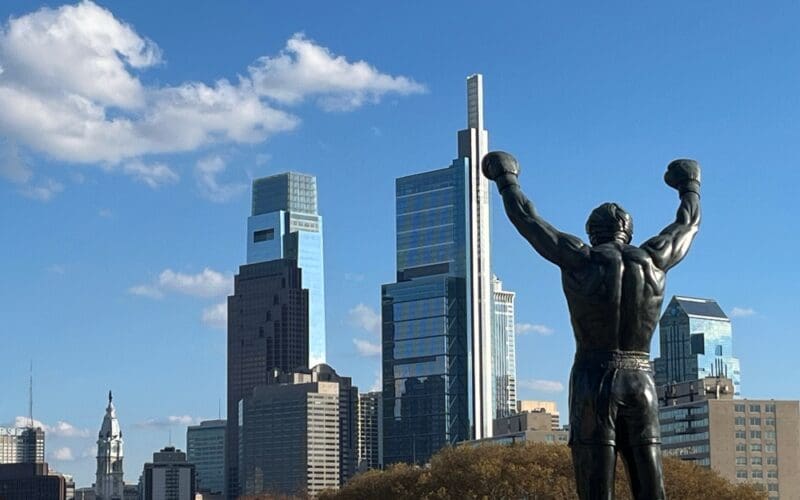
Philadelphia
Lincoln Financial Field hosts six matches in the south of the city, easily reached on the Broad Street Line from Center City in twenty minutes. After the Meadowlands, the Linc’s open concourses feel almost civilised.
The Logan Philadelphia, a Curio Collection by Hilton property, makes the strongest corporate case, a rooftop bar, an art-filled lobby and walking distance to most Center City employers. The affordable landmark gem here is the Bellevue, the 1904 grand dame on South Broad now operated under Hyatt’s Unbound Collection, with rates that consistently undercut comparable cities. The Four Seasons at Comcast Center sits above both for those whose travel policy permits.
Reading Terminal Market is the obvious move for breakfast or a casual lunch. The Barnes Foundation is a ninety-minute hit of world-class Impressionism. Vetri remains the most reliable client dinner; Friday Saturday Sunday in Rittenhouse the more interesting one. Independence Hall is worth the queue if you have an entire morning and an interest in the founding documents.
Atlanta
Mercedes-Benz Stadium hosts eight matches including a semi-final from a downtown footprint that puts it within walking distance of Centennial Olympic Park, a rarity among American World Cup venues. MARTA from Hartsfield-Jacksontakes twenty minutes, which is more than can be said for almost any other big-city airport-to-stadium link in the United States.
The Four Seasons Atlanta in Midtown delivers the expected corporate amenity stack. The Hotel Clermont on Ponce de Leon offers a much smaller, much more interesting alternative, a converted 1920s motor inn with rooftop views and a basement burlesque bar that remains a Southern institution. Between them sits the St Regis Atlanta in Buckhead for the meeting-heavy traveller who wants a residential feel.
The High Museum’s rolling exhibitions change quickly, so check before you arrive. Krog Street Market and Ponce City Market both feed the bleisure crowd well. Bacchanalia stays Atlanta’s serious-dinner answer; Staplehouse the harder-to-book alternative if you have time and connections. For a morning run, the BeltLine’s Eastside Trail is the move.
Miami
Hard Rock Stadium in Miami Gardens hosts seven matches including a third-place play-off. It is sixteen miles from South Beach and twenty-three from Brickell; Tri-Rail from Mangonia Park is the official rail option but most business travellers will book a car. Heat and humidity peak in June and July, so plan a buffer.
The Four Seasons Hotel at the Surf Club in Surfside delivers a corporate suite with serious privacy and a Thomas Keller restaurant on site – exceptional for entertaining. For the better-value landmark gem, look at The Betsy on Ocean Drive, an Art Deco property that punches above its weight on service and has been hosting visiting dignitaries for decades. The 1 Hotel South Beach is the third option for the environmentally minded.
A morning at the Pérez Art Museum, an afternoon at Vizcaya and an hour walking the Wynwood Walls before lunch at KYU, that is a defensible bleisure half-day. Joe’s Stone Crab is closed for its annual summer break, so book Sexy Fish or Stubborn Seed for client dinner. Versailles in Little Havana is the late-night Cuban institution; come for the cafecito.
The Central Corridor
Toronto
BMO Field on Toronto’s lakeshore hosts six matches following a substantial capacity expansion to 45,500, the only Canadian venue capable of taking that load. The UP Express train from Pearson hits Union Station in twenty-five minutes, and the stadium is a twelve-minute streetcar ride from there. About as efficient as world football gets.
The Shangri-La Toronto on University Avenue is the dependable corporate choice, 202 rooms, a 4,000 square-foot ballroom and walking distance to most Bay Street offices. For something with character, the Drake Hotel on Queen West has been the city’s design-led independent for two decades and remains far more interesting than its rate suggests. The Hotel X on Exhibition Place sits closest to the stadium itself for matchday simplicity.
The Ontario Place redevelopment is worth a look if you have an evening. The St Lawrence Market gives a fast read of the food scene. Edulis stays Toronto’s most adventurous tasting room; Alo, when you can get it, the city’s top destination. If your client expects a steak, Harbour Sixty answers without drama.
Kansas City
Arrowhead Stadium, branded Kansas City Stadium for the tournament, hosts six matches in a venue engineered for American football but well-organised for visitor flow. It is eleven miles east of downtown and there is no rail option; shuttle is the answer. The good news: Kansas City Airport’s three-year-old terminal has made the front end of the trip dramatically less painful than it used to be.
The Loews Kansas City Hotel in the Power & Light District is the strongest corporate buying choice – 800 rooms, a direct convention centre link and walkable to most downtown employers. The 21c Museum Hotel in the Crossroads is the landmark gem – an art-led property with a serious restaurant in The Savoy and rates that quietly surprise visitors used to coastal pricing.
Q39 and Joe’s Kansas City both belong on any barbecue list. The Nelson-Atkins Museum’s Bloch Building is genuinely world-class architecture and free. The Crossroads First Friday gallery walk is the right cultural touch if your dates align. For a morning run, the trail around Brush Creek hits the Plaza in fifteen minutes.
Dallas
AT&T Stadium – the Cowboys’ home, branded Dallas Stadium for the tournament, hosts nine matches including a semi-final, second only to MetLife. It sits nineteen miles west of downtown in Arlington and there is no train; DART buses run but a car remains standard practice.
The Joule downtown is the most interesting corporate-friendly address, a converted neo-Gothic bank with a serious art collection, a cantilevered rooftop pool extending over Main Street and walking access to the Arts District. For the landmark gem, the Adolphus Hotel, opened in 1912 by beer baron Adolphus Busch, delivers history at sub-Four Seasons rates following a thoughtful Marriott Autograph refurbishment.
The Nasher Sculpture Center is two hours well spent. Dallas Museum of Art is free. For dinner, Knife by John Tesar is the steak answer; Petra and the Beast in East Dallas the more interesting one. Reunion Tower’s GeO-Deck is the obvious skyline view, but Five Sixty above it serves Wolfgang Puck if you want height with a meal.
Houston
NRG Stadium hosts seven matches in a city that becomes genuinely sub-tropical in late June. The METRORail Red Linefrom downtown runs directly to the stadium in thirty minutes, a rarity among American World Cup venues and the kind of detail that will matter on a midweek evening with a 4pm client meeting still to clear.
The Post Oak Hotel in Uptown delivers serious corporate amenity, Forbes Five-Star service, a fleet of Rolls-Royces, Mastro’s Steakhouse on site – and remains genuinely useful for entertaining oil and gas clients in particular. La Colombe d’Or in Montrose, a 1923 mansion turned 21-room boutique, gives a more characterful stay at a friendlier rate and quietly retains Houston’s most distinctive private dining room.
The Menil Collection is one of the finest small museums in America, with the Rothko Chapel adjacent, both free, both essential. Theodore Rex in the Warehouse District is the food destination; Riel and Indigo are the other plausibles for client dinner. Buffalo Bayou Park handles the morning run; if you have ninety minutes, the Space Center at NASA Johnson is the rare American attraction that actually clears its own marketing.
The West Coast
Vancouver
BC Place’s retractable roof makes Vancouver the meteorologically safest venue of the tournament. Seven matches are scheduled here, all reachable on the SkyTrain Expo Line from downtown in eight minutes. The trip from YVR takes twenty-six. About as friction-free as international football gets.
The Fairmont Pacific Rim, immediately above the Canada Place convention complex, remains Vancouver’s strongest corporate choice – excellent rooms, the Lobby Lounge for the city’s most useful informal meetings and Botanist for serious dinner. For the affordable landmark, the Sylvia Hotel, a 1912 vine-covered property on English Bay, offers waterfront views at rates that border on a clerical error.
A morning on the Stanley Park seawall is non-negotiable. Granville Island has been refurbished and is back on form. For client dinner, AnnaLena in Kitsilano is the most reliable answer below the obvious Hawksworth choice. The Polygon Gallery in North Vancouver is worth the SeaBus crossing, both for the work and for the fifteen minutes of harbour on the way over.
Seattle
Lumen Field hosts six matches in the SoDo district, a four-minute Link light rail trip from Westlake Center downtown. From Sea-Tac it is thirty-eight minutes on the same line, no transfer required. Excellent for the time-poor.
The Fairmont Olympic remains the corporate standard, 450 rooms, the Georgian Room for serious dining and walking distance to most downtown employers. The Sorrento Hotel on First Hill, a 1909 mission-revival property that has hosted everyone from Theodore Roosevelt to Stephen King, is the landmark gem with rates that consistently surprise. The Lotte Hotel a few blocks away offers the contemporary alternative.
Pike Place Market is too obvious to skip; go early. The Chihuly Garden and Glass at Seattle Center is genuinely worth the entry fee. Canlis is the serious dinner address; Lark the better-value alternative; Communion in the Central District the most rewarding new option. The Climate Pledge Arena is worth a look if there is an event running.
San Francisco Bay area
Levi’s Stadium sits forty-five miles south of San Francisco in Santa Clara, deep in Silicon Valley. Six matches play here including a quarter-final. The VTA light rail connects from San Jose; from San Francisco proper, Caltrain to Mountain View plus a thirteen-minute Lyft is the realistic combination.
Given the dispersed geography, the choice splits. Stay in San Francisco at the Four Seasons Embarcadero for serious corporate amenity and matchday transfers via car. Stay closer to the stadium at the Hotel Valencia Santana Row, a comfortable Latin-themed property with shopping and dining on the doorstep at a fraction of the city rate, and the landmark gem of this region. For Silicon Valley meetings, the Rosewood Sand Hill in Menlo Park is the third option and remains the de facto venture-capital boardroom.
In the city, Tartine Manufactory for breakfast, the new SFMOMA wing for an hour, lunch at Souvla in Hayes Valley. In the South Bay, the Computer History Museum in Mountain View is more interesting than it sounds, and the Stanford campus repays a morning’s walk. State Bird Provisions remains the city’s most reliable evening; Quince for the entertaining-the-board occasion.
Los Angeles
SoFi Stadium, the most expensive sports venue ever built, hosts eight matches in Inglewood, including the United States’ tournament opener on 12 June. It is three miles from LAX and ten from downtown, and the Metro K Line extension finally connects it properly. Expect West Coast traffic regardless.
The Beverly Hills Hotel sits well above stadium logistics for the executive prioritising entertaining; the Beverly Wilshireis more practical at slightly lower rates for those who need actual meeting space. The Hollywood Roosevelt is the landmark gem, opened in 1927 to host the first Academy Awards, recently refreshed and far more interesting at the price than the chain alternatives. The Proper Downtown is the design-led wild card if a Downtown LA meeting agenda is in play.
Griffith Observatory at sunset; the Getty Center for an entire morning of architecture and Cézannes; Republique on La Brea for the most reliable LA breakfast. Vespertine in Culver City is the dinner if you can get it; n/naka the alternative; Bestia for the easier, more energetic table. A morning run on the Strand from Manhattan Beach to Hermosa Beach handles the jet lag better than the gym.
Mexico
Mexico City
The opener is here, at the stadium FIFA brands “Mexico City Stadium” for the tournament but which every cab driver in the city still calls the Azteca, and which now carries Banorte naming rights on every surface except FIFA signage. Five matches play here including the 11 June kick-off. Tasqueña metro station is the closest rail option, but a car from Polanco remains the standard play. Allow ninety minutes minimum on matchday given traffic and altitude.
The Four Seasons Mexico City on Reforma has been the standard executive choice for years, hacienda-style courtyards, a Mexican restaurant in Zanaya that handles client dinner without leaving the property, walking access to the Zona Rosa, and remains genuinely good. The landmark gem is Hotel Carlota in Colonia Cuauhtémoc, a modernist Mexico City classic with a gallery-quality design programme and rates that compare favourably with anything in Polanco. Las Alcobas in Polanco is the third option for those who want corporate-grade meeting space.
The Museo Nacional de Antropología is half a day, no negotiation. Pujol if your client can get the reservation; Quintonil if they cannot. The Museo Soumaya’s Carlos Slim collection is free and the building alone repays the trip. Tacos at El Califa de León in San Rafael, recently the first taqueria in the world with a Michelin star – is the post-meeting move. Acclimatise to the altitude before any morning run.
Guadalajara
Estadio Akron – branded Estadio Guadalajara for the tournament, hosts four matches in Mexico’s second city. It sits in Zapopan, thirteen miles north-west of the historic centre; allow forty minutes by car. The metro does not quite reach it, which makes hotel choice unusually consequential.
The Hyatt Regency Andares delivers the most reliable corporate amenity in the city, large rooms, a business-grade gym, walking access to Andares’ restaurants and the international banks. The Casa Pedro Loza in Centro Histórico is the affordable landmark, a 19th-century mansion turned ten-room hotel with painted ceilings and a courtyard you will remember for a long time. Demetria, in Providencia, is the design-led option for the longer stay.
The Hospicio Cabañas, UNESCO listed for José Clemente Orozco’s frescoes, is one of the most underrated cultural experiences in North America. Tlaquepaque’s craft market is the obvious afternoon. Alcalde is the city’s best modern restaurant; Pal Real does Saturday brunch better than anywhere south of Austin. A day trip to Tequila town runs from any major hotel and reliably entertains visiting clients.
Monterrey
Estadio BBVA – branded Estadio Monterrey for the tournament – hosts four matches in Guadalupe, eight miles east of downtown. The metro’s Linea 2 does not quite reach; a car is the play. Monterrey is the most overtly business-led city in Mexico, and the World Cup is being treated as a quasi-corporate showcase locally; expect a deeper bench of premium hospitality than the casual visitor might predict.
The Live Aqua Urban Resort San Pedro is Monterrey’s strongest corporate offer, large rooms, excellent meeting space, walking access to the Distrito San Pedro shopping district where most multinational executives eventually dine. The Habita Monterrey is the design-led landmark gem – 39 rooms in a stripped-back concrete tower with rooftop views back to the Cerro de la Silla. The Quinta Real San Pedro is the more traditional alternative.
Macro Plaza for the scale of Mexican civic ambition. The MARCO contemporary art museum for an hour. Pangea or Koli for serious dinner. The cable car at Parque Fundidora gives the best fast read of the city in under an hour. For matchday entertaining, BBVA’s private boxes are among the best-designed in the tournament, worth the upgrade if the trip is justifying itself on relationship grounds.
The final whistle
The 2026 World Cup is a logistics puzzle as much as a tournament. The cities that work hardest for the time-poor executive are those that put stadium and airport on the same rail line, Vancouver, Seattle, Houston, Atlanta. Those that demand more careful planning, the Meadowlands, Foxborough, Arlington, Inglewood, more than repay it on the night.
Either way, book matchday hospitality through On Location, FIFA’s official agency, and put it through the relationship budget rather than travel. Consider whether a same-day flight back to London actually beats one more night in the host city. For most of these places, Houston in late June, Vancouver in mid-July, Mexico City at any hour, the answer is no. The tournament will not be back on this continent for at least a generation. Treat the trip accordingly.