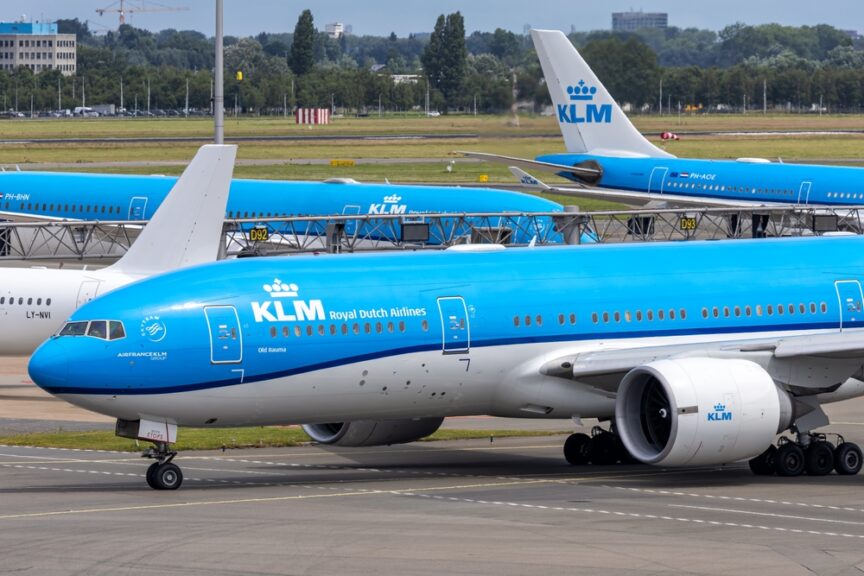
KLM will fly Amsterdam to Tel Aviv again from 25 August, ending a six-month suspension that was widely read as a sign of normalisation. For corporate travel programmes, the more consequential line sits further down the airline’s own alert page: Dubai, Riyadh and Dammam stay suspended up to and including 24 October.
That is the date that matters. Tel Aviv is a thin business market for a European hub carrier. The Gulf corridor is the one that carries the trips, and for UK companies routing through Schiphol it remains shut for another ten weeks at minimum.
The Tel Aviv return is not a clean resumption either. Flights operate via a technical stop in Larnaca, where crews overnight rather than staying in Israel, with no timeline given for normal layovers. That adds block time, complicates same-day returns and puts a second failure point into the rotation.
Three extensions in five weeks
KLM’s Gulf extensions tell the story in miniature. First 23 August, then 6 September, then 24 October, three extensions inside five weeks, each one longer than the last. Programmes that rebooked against the earlier dates have now rebooked twice.
Booking teams should also note that third-party trackers lag badly. One major outlet was still publishing the superseded 6 September date on 10 August. In a rolling disruption of this kind, only the operating carrier’s own notice page can be relied on, and KLM’s Middle East statement is the primary record.

Where the rest of the market sits
- KLM, Tel Aviv from 25 August via Larnaca; Dubai, Riyadh and Dammam to 24 October
- Air France, Riyadh to 14 August, Dubai and Beirut to 18 August, on short rolling extensions
- Lufthansa Group, with Lufthansa, SWISS and Austrian back into Tel Aviv; Lufthansa and SWISS Dubai to 13 September; Abu Dhabi, Amman, Beirut, Dammam, Riyadh, Erbil and Muscat to 24 October
- British Airways, Dubai, Tel Aviv, Bahrain and Amman to 25 October, Doha and Riyadh cut to once daily, Jeddah dropped permanently
- Air Canada, Tel Aviv and Dubai to mid-January 2027
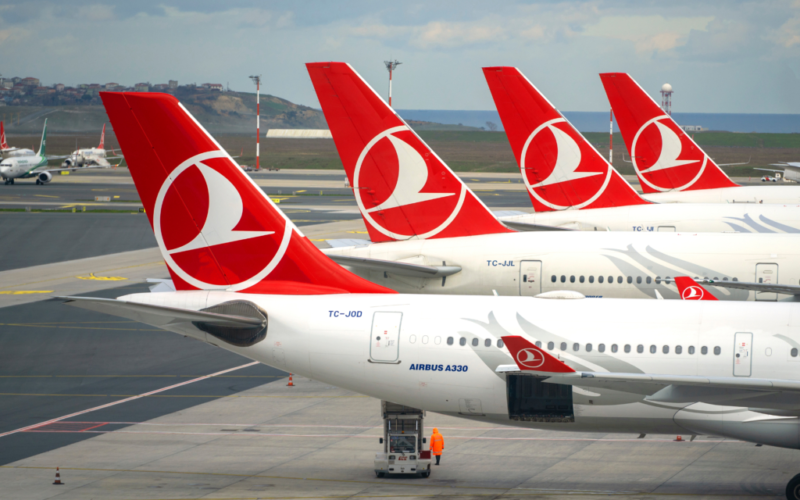
- Turkish Airlines, with Abu Dhabi, Dubai, Beirut and Amman restored, Iran still suspended
- Singapore Airlines, Cathay Pacific, Finnair and ITA, all sitting at 24 to 26 October for Dubai
Two things stand out. Air France and KLM, part of the same group, are running visibly different postures, with Air France on short rolling extensions and KLM on a single long one. And the clustering around 24 and 25 October is the IATA summer season boundary, not a security forecast. Most carriers have written the Gulf out of summer and will take a fresh decision for the winter schedule. That pattern echoes the capacity reductions seen when British Airways cut its Middle East flying earlier in the year.
The constraint is regulatory, not commercial
The blockage is not primarily about demand. EASA’s conflict zone bulletin, extended to 31 August, advises operators to avoid Bahrain, Kuwait, Qatar and UAE airspace at all altitudes. Gulf airports are open and Gulf carriers are flying. European operators are simply not cleared into the airspace above them.
Schiphol has already felt the effect on volumes, having reported softer traffic across the first half of 2026 as conflict and weather trimmed flight numbers.
For the next quarter, three practical points. Do not book the Gulf on a European carrier for September without a fallback identified, whether that is a Gulf carrier, a Turkish Airlines connection or a rescheduled trip. Assume suspensions get extended rather than lifted, because that is what the pattern since June shows. And check insurance wording carefully. Many corporate policies exclude losses arising from military airspace closures, and most treat late October as a decision point rather than a guaranteed return date. Travellers heading to Israel should also review current Foreign Office advice on the region before committing to a booking.
Schedules are as of 13 August 2026 and are changing frequently. Verify with the operating carrier before booking.